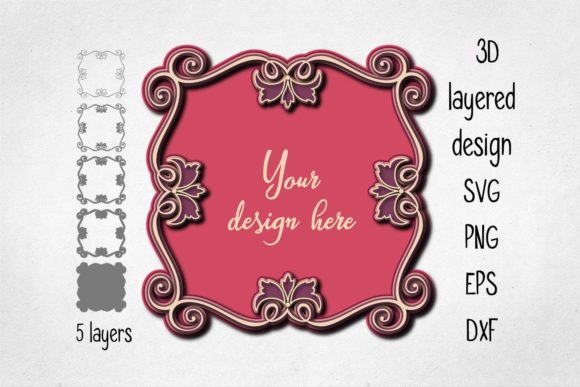
3D Layered Square Frame: A Versatile SVG Shape for Creative Projects
As a professional graphic designer who frequently works with small businesses and creative brands, I’m always on the lookout for design assets that bring depth and character without overwhelming a project. The 3D Layered Square Frame is one such asset that caught my attention recently while preparing visuals for an upcoming handmade brand launch. In this review, I’ll walk through how this 3D SVG shape performed in real-world design scenarios and what you should consider before using it in your own client work.
Aesthetic First Impressions: Style Meets Structure
The moment I opened the 3D multilayer design, I was drawn to its architectural balance and subtle visual complexity. This isn’t just another flat frame—it’s a layered composition with a sense of dimensionality that immediately adds a modern yet warm feel to any layout. The square structure offers a grounded base, while the overlapping layers introduce movement and a tactile quality that feels both digital and handcrafted. It’s a great fit for clients in the handmade business or those looking to inject a bit of artisanal charm into their branding materials.
I found the mood it created leaned toward contemporary minimalism but with a decorative edge. It’s not too ornate, which means it doesn’t clash with clean typography or simple iconography. That makes it adaptable for a wide range of styles—from cozy home decor themes to more polished print-on-demand products like mugs or tote bags.
Real-World Application in Brand Identity Work
In my latest project for a local boutique selling custom wall art, the 3D Layered Square Frame played a key role in establishing a cohesive look across product mockups and packaging. As part of a design bundle, it worked well as a hero element on social media posts, especially when paired with lifestyle imagery of the finished product. Its layered structure gave the visuals a three-dimensional feel that helped convey the premium quality of the items.
For logo design and brand identity, I used the frame subtly as a background accent rather than a foreground feature. It added texture and interest without distracting from the core brand elements. However, it wasn’t ideal for high-impact logo treatments where clarity and simplicity are paramount. Instead, it served better as a supporting detail—like framing taglines or product names on labels and signage.
Performance Across Multiple Design Outputs
I tested the 3D SVG format extensively across various outputs. On product labels and packaging design, it looked best when scaled up and placed behind text. For printable designs, such as wall art templates or gift cards, the file maintained excellent sharpness even at large sizes. The vector nature of the SVG design allowed me to tweak colors and layer spacing easily in Adobe Illustrator, which is essential when aligning with a client’s brand palette.
- Web design: The frame added a nice touch to website headers and section dividers, especially when used with white space to emphasize content hierarchy.
- Social media graphics: It worked beautifully as a Pinterest pin overlay and as a border for Instagram carousel images, enhancing the overall visual appeal without cluttering the feed.
- Cricut projects: When exported as PNG, the design cut cleanly on vinyl and cardstock, making it a solid choice for DIY crafters and small business owners creating custom stickers or invitations.
- Editorial design: Used as a decorative box for quotes or featured articles, it elevated the page’s aesthetic while maintaining readability.
Best Use Cases: Where This Asset Shines
The 3D Layered Square Frame truly excels in larger layout areas where its dimensional qualities can be appreciated. Think of it as a visual anchor for product mockups or hero graphics in marketing campaigns. It also stands out in themed collections, such as seasonal promotions or holiday gift sets, where the layered aspect adds a festive yet elegant touch.
Another strong point is its versatility in commercial design assets. Whether embedded in a Canva template or used in a sublimation design for merchandise, it maintains a professional appearance. The multiple layers give users the freedom to customize each segment individually, allowing for a tailored look that matches the client’s vision precisely.
Use with Caution: Situations to Avoid
While the Shapes component of this design is appealing, it’s important to note that the 3D effect might not hold up in smaller formats. When applied to a t-shirt design or sticker design under 4 inches, the intricate layering becomes less visible and can appear muddy. In these cases, simplifying the design by using only one or two layers significantly improved legibility and visual impact.
Also, if your project has a minimalist branding direction or requires very clean visual hierarchy, the frame’s decorative nature could potentially clash with the intended tone. I found it best to use the asset sparingly in such contexts—perhaps as a subtle watermark or background texture instead of a central graphic.
Design Compatibility and File Format Considerations
One of the things I appreciate about this graphic design asset is its compatibility with a wide range of tools and platforms. The SVG format allows for easy editing and resizing, which is crucial for adapting it to different marketing visuals and layouts. I did notice that when converting to PNG, the transparency settings varied depending on the software used, so it's worth double-checking the PNG transparency if included in the package.
When testing color variations, I overlaid the frame onto both light and dark backgrounds. The contrast held well on darker tones, especially when using bold, saturated hues for the layers. On lighter backgrounds, however, it required careful color pairing to avoid fading into the surroundings. This made me think of it as a clipart or illustration that needs intentional placement within the design system.
Type Pairing and Visual Hierarchy
I experimented with combining the 3D Layered Square Frame with different font styles to see how it affects visual trust and recognition. With serif fonts, the frame added a classic elegance, perfect for luxury home goods. When paired with sans serif fonts, it brought a fresh, modern energy suitable for tech startups or lifestyle brands.
However, I noticed that script fonts or handwritten fonts sometimes overwhelmed the frame’s geometric structure. To maintain brand consistency, I recommend using the frame alongside typefaces that complement its architectural style—such as display fonts with clean lines or monospaced typewriter-style fonts.
Commercial Licensing and Professional Readiness
Before incorporating this asset into a client project, I made sure to confirm the commercial license details. Since many designers repurpose elements for multiple clients or sell them in creative marketplaces, having clear licensing terms is non-negotiable. Fortunately, the asset came with a permissive commercial license, making it safe to use in print-on-demand and Etsy product listings.
I also tested the asset in grayscale to assess its performance in black-and-white applications. While the 3D effect diminished slightly, the layered structure remained visually engaging, which is reassuring for designers who need to present concepts in monochrome or adapt to unexpected printing constraints.
Final Thoughts: A Useful Creative Asset for Many Projects
The 3D Layered Square Frame is a thoughtful addition to any designer’s toolkit, especially for those working with small business branding, digital sellers, or merchandise design. Its structured yet soft aesthetic makes it a good match for home decor and wall decor concepts, while its editability ensures it can be adapted to suit diverse brand identities.
What stood out most was how it enhanced the emotional appeal of the designs. Whether it was framing a quote on a blog post or acting as a decorative border on a product label, it contributed to a more refined and intentional look. That kind of polish is invaluable when presenting to clients or launching new product lines.
Still, like all design assets, it’s not universally applicable. Use it carefully in projects that demand strict visual hierarchy or minimalist aesthetics. But when it fits the right context—especially in large layout areas or themed collections—it can elevate the final result from basic to professional.
Practical Designer Tips Before Finalizing
- Preview the 3D SVG at both small and large sizes to ensure it retains its integrity.
- Test it on real mockups to see how it interacts with other design elements and lighting conditions.
- Inspect file formats (SVG, PNG) to make sure they meet your workflow requirements and output specifications.
- Consider how it complements your chosen font styles—don’t let the frame overshadow the message.
- Always verify commercial licensing before using it for client work or selling in online marketplaces.
Overall, the 3D Layered Square Frame is a flexible and expressive design asset that deserves a place in your library—if used wisely. It’s particularly effective in creative design projects where a touch of dimension and personality can help differentiate your work in a competitive marketplace.